(adsbygoogle = window.adsbygoogle || []).push({ google_ad_client: "ca-pub-4846363302131893", enable_page_level_ads: true }); Kombackblog: Shoppers

Kombackblog

kombackblog is one stop blog for all African news. Business, Fashion, Real Estate, Cars, Politics, World news, Culture, Electronics

Showing posts with label Shoppers. Show all posts

Jan 28, 2025

How To Save Money Shopping Online In Nigeria

11:53 PM 0
How To Save Money Shopping Online In Nigeria


How To Save Money Shopping Online In Nigeria

Shopping online in Nigeria has become a bigger part of our lives, especially in this internet age. More people now buy everything online, from groceries and daily needs to holiday gifts. But one common challenge has been how to save money shopping online.

It’s easy to lose track of your budget when shopping online. Adding items to your cart feels effortless, but it can lead to spending more money than you planned. Luckily, there are smart ways to save while shopping online in Nigeria. In this article we will share ten simple, easy to apply tips to help you save more money shopping online.


11 Simple Ways To Save Money Shopping Online in Nigeria


  • Focus On Your Needs


Shopping online in Nigeria makes it easy to spend money without thinking. They use eye-catching designs, sale ads, and one-click buying to tempt you. To avoid this, write down what you need before you start shopping. Keep the list somewhere you can see, like on a sticky note near your computer or phone. Also, don’t shop when you’re hungry, angry, lonely, or tired. These emotions can lead to impulse buys you’ll regret later.


  • Remember, Credit Cards Are Real Money  


It’s easy to forget you’re spending real money when using a credit card, especially while shopping online. Buying things can feel exciting because it triggers a happy feeling in your brain. Shopping online can make it even easier to lose track of how much you’re spending. To stay in control, set a weekly reminder to check your credit card balance. Better yet, pay it off regularly. This helps you treat your credit card like cash while still earning rewards. Plus, paying your balance on time protects your credit score by keeping your credit usage low.


  • Decide A Budget For Your Shopping


We often forget to set a budget when shopping online. Why does this happen?

When we shop offline and use cash, we stick to a fixed amount. This acts as our budget and helps us see exactly how much we’re spending. But with shopping online, and online payments through UPI or bank accounts, it’s harder to track our spending.

To stay in control, set a clear budget before shopping and try to spend less than that amount. If something costs more than your budget, look for ways to save elsewhere. Limit your online shopping to 10-15% of your monthly income for items like clothes, electronics, and groceries.

For bigger purchases, plan ahead and save over a few months instead of spending all at once. Avoid impulse buying, especially for travel bookings, luxury items, or expensive electronics, to keep your finances on track.


  • Compare Prices Before You Buy


When shopping in any Nigerian online store, businesses no longer have to deal with "menu costs." This term refers to the expense of physically updating prices, like when restaurants print new menus. Online stores can change prices instantly without any extra costs.

Even though prices often change and can be confusing, you can still rely on your instincts. If something feels overpriced, take a moment to check. Search for the item online to see if other stores have it for less. This way, you can make sure you're getting the best deal and saving as much money as possible.


  • Use A Free Coupon Browser Extension Wisely


Finding great deals has become easier than ever, and you don’t need to search through newspapers for coupons anymore. Many discounts and coupons are available online, either from the product manufacturer or the store itself. No matter where they come from, these offers can help you save a lot of money.

You can also make online shopping even easier by adding a browser extension that automatically searches for promo codes or discounts on the items you're planning to buy. Unlike annoying pop-ups, these extensions only focus on what you're already shopping for. However, be careful with deals that encourage you to buy more to save more, like free shipping for spending over $60 or bigger discounts as you spend more. While these offers might seem tempting, they can lead to spending more than you planned.

If you don’t really need an item or it’s beyond your budget, don’t let these discounts push you to buy.


  • If You Don't Need It Immediately, Wait


Online stores often use tricks to make you feel like you need to buy something right away. They might show countdown timers, tell you your cart will expire soon, or warn that there’s only a few left in stock. Sometimes these claims are true, but other times they’re just a way to push you into making a quick purchase.

Here’s a useful tip: if you’re logged into your account and add an item to your cart but don’t check out, the store might send you an email with a discount to convince you to finish buying it. This can save you some money.

On the other hand, if the store doesn’t send a discount and you forget about the item, it’s a good sign you didn’t really need it after all. Waiting before you buy can help you avoid spending money on things you don’t actually want or need.


  • Unsubscribe From Mailings That Send You Ads


It’s common to sign up with your email for a 10% or 15% discount on your first purchase. But after that, you might start getting daily emails about new products or deals. Even if you ignore most of them, opening just one out of curiosity can tempt you to spend money you didn’t plan to.

The next time you open one of those emails, take a moment to unsubscribe. You can usually find the option at the bottom of the email. Once those emails stop, you won’t have to deal with the extra temptation. It’s a simple way to save money when shopping online in Nigeria and avoid unnecessary spending, especially since you already get enough ads elsewhere.


  1. Avoid "Buy Now, Pay Later"


Pay-in-4 loans might seem like a great idea. You only pay a quarter of the price upfront, and the rest is split into three more payments. It sounds simple and easy, but there’s a catch. If you miss a payment, you could face fees as high as 20% or 25%of the original price. On top of that, interest rates can go up to 37%.

The problem is that it’s easy to underestimate how much money you’ll have for future payments. While the first payment might feel manageable, the rest could end up being harder to handle. Before using this option, make sure you’re confident you can afford all the payments to avoid extra costs.


  1. Know The Best Time To Buy, Especially For Big Purchases


Waiting for a holiday weekend could save you a lot of money. Online stores often offer big discounts during events like Christmas Day, Valentine day, Boxing Day, independence day, labor Day or new year because they know people shop more during their time off.

If you’re shopping for outdoor items, like smartphones or electronics, it’s even better to wait until fall. End-of-season and off-season sales can help you find great deals on outdoor furniture, gear, and even clothes. Being patient can make a big difference in how much you spend.


  • Buy Groceries Irl To Avoid High Fees


Getting groceries delivered can feel like a smart choice since you won’t grab extra items like you might in the store. However, these services often cost more than you realize. Many items are marked up, and you’ll also pay a delivery fee.

On top of that, you’re expected to tip the shopper or driver. For smaller orders, these extra costs can make your total bill up to 50% higher than what the groceries are actually worth. While delivery is convenient, it’s important to consider if it’s really worth the added expense.


  • Consider Buying Used


You don’t need to spend hours digging through thrift store racks to find a great deal. Many big stores now offer a better option. They buy back used clothes and items from their own brands and resell them at lower prices.

This setup is a win for everyone. Stores attract shoppers who care about saving money and the environment, while you get high-quality items for much less than their original cost.


Quality and Safety Tips To Shop Online In Nigeria

Shopping online in Nigeria can be risky if you’re not careful. Some people take advantage of online shoppers and may try to scam you.

If you don’t pay attention to key details, you might also end up buying something of poor quality.

To help you shop safely and wisely, here are the best tips to keep in mind.:


  • Always check customer reviews of the online store you are buying from


Before buying from an online store in Nigeria, always take time to read customer reviews.

Some stores, especially smaller or local ones, might scam customers by taking money but failing to deliver what they promised. This is more common with stores found through social media ads, and many of these stores don’t even have proper websites.

To stay safe, check reviews on platforms like Google, Quora, X.com, Reddit, or Instagram. Look at what other buyers are saying, and pay attention to real-life photos and videos they share. These can show flaws that aren’t obvious in the store’s pictures. Make sure to check both product and seller reviews to avoid any unpleasant surprises.


  • Go through the product's replacement/exchange/refund policies


When shopping online, choose stores with clear refund, return, or exchange policies. This way, you’re protected if something goes wrong.

Be careful about the personal information you share on shopping apps or websites. Before sharing, ask yourself: Do others share this info? Is it safe to share? Does the website use strong encryption to protect your data? If you’re unsure, don’t share.

Never enter your card details unless you fully trust the site. Also, know your right to a charge back. If you pay with a credit card and the seller turns out to be a scam, you can ask your bank for a charge back. This process holds the seller accountable and refunds your money after proper checks.


  • See if Cash On Delivery is available for purchases


When shopping online, check if Cash on Delivery (COD) is an option.

Most online stores offer COD, though some may require a minimum order amount.

If a store doesn’t provide COD, it could be a red flag—they might just want your money without delivering anything.

For first-time orders from a new store, it’s safer to choose COD. If the delivery is smooth and the product is good, you can try online payments next time.


  • Compare products across sites and stores for quality and price


Before buying anything, check different stores and websites to find the best deal. Prices and quality can be very different, so comparing can help you make a better choice.

Look at product details, read customer reviews, and compare prices on different platforms.

Use tools like comparison websites, and don’t forget to consider things like warranty, shipping costs, and customer service. A little research can save you money and ensure you get a good product.


  • Don’t judge a product by how it looks


Something might look great on the outside, but that doesn’t mean it’s good quality. Instead of focusing on how it’s packaged or advertised, think about how it will work for you. Check its features, durability, and if it fits your needs before deciding.

Be careful with gift card exchanges too. Scammers often pretend to be real buyers or sellers. They might ask for your gift card code or use fake payments to trick you.

Always check if the platform or person is trustworthy by looking at reviews and ratings. Avoid anyone who pressures you to act fast or asks for strange payment methods like gift cards. Use only trusted platforms, and never share gift card codes over email or phone.


Frequently Asked Question (FAQs)


  • How does online shopping save our time?

Online shopping helps you save time in many ways.

You can shop whenever you want, without worrying about store hours.

It’s easy to compare prices from different sellers without going from store to store.

Home delivery means you don’t have to travel to buy what you need, and you can track your order to know when it will arrive.

Plus, you don’t have to stand in long checkout lines. It’s a faster and more convenient way to shop.


By kingkentus

Jul 18, 2024

Online Shopping Statistcs In Nigeria

10:08 PM 0
Online Shopping Statistcs In Nigeria


Online Shopping Statistics In Nigeria

The path of online shopping statistics  in Nigeria has been one that many have chosen to take over time. It involves buying and selling different kinds of products ranging from groceries to electronic, fashion accessories and shoes. Nevertheless it's growth has and seemed to not be stopped by any other shopping method. Most recently, the increase in the technological advancement of the country has prompted the increase in internet suffering. Individuals who soar through the internet looking for the easiest purchase to make.


Online shopping has also become an extremely  convenient approach for them and so leads to a tremendous increase in demand for more advanced platforms that can as well satisfy their demand.

In this article, we'd looking at the  latest online shopping statistics in Nigeria in 2024, and discuss the trends, and recent changes going on within the industry.


E-Commerce in Nigeria: Latest Facts and Figures in 2024

Online Shopping Statistics In Nigeria

According to the bureau of Statistics, the e-commerce market revenue in Nigeria is proposed to reach $12.8 billion at the end of  2024, thereby leading to the increase in the  compound annual growth rate (CAGR) from $5.6 billion in 2019 to 18.9% in 2024.  A growth rate which has been  been fueled by the increasing likeness for online shopping among Nigerian consumers.


Currently the e-commerce market in Nigeria is currently monopolized by a few major strategic players, with Jumia as the largest market share holder in the industry holding a share of about 34.4% as at 2021, likewise Konga holds a share of about  (15.2%) keeping it at 2nd place, Jiji with a share of about  (7.8%), and finally Slot with the lowest share of about (4.2%). However, the market is constantly experiencing change as individual preferences begin to dwindle with time and age,  smaller niche e-tailers are now gaining more ground by providing clear distinction and segmentation  of products or services to fit each consumer's preferences.


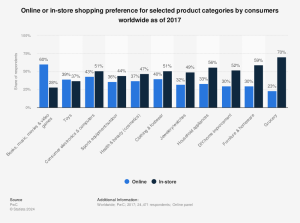
Each consumers preference surmount to a total number of about 48% for fashion and beauty,

24% for electronics and other appliances, 12% for food and beverage products purchased daily from different brands. The various products have proven to be the most searched products for Nigerian online shoppers, according to Jumia's Nigeria Mobile Trends Report 2023.


Factors Driving E-Commerce Growth in Nigeria


Some of the factors currently driving e-commerce growth in Nigeria include the following:


  1. Internet and mobile accessibility: The rate at which internet and smartphone users actively make use of the internet has increased tremendously over time. A total of about 98 million Nigerians  make use of the internet daily with an average of about 92% having constant access to the internet via their mobile devices. This incident has become a driving force for online shoppers in Nigeria.


  1. Increase in the income of both  middle-class and lower class citizens: As years go by, the cost of living, expense, and income have tripled as opposed to their usual number. Nigeria now experiences an increase in the population of the middle-class, with an estimated number of about 23% of the country's population. With a steady growth pattern which is  now categorized as  classified  middle-income earners as of 2022 (African Development Bank) signifying that the country has a substantial disposable income which can help in driving the demand of individuals across different e-commerce platforms.


  1. Improved logistics and payment infrastructural patterns: The online shopping experience of Nigerian citizens has undergone intense  development as there has been significant improvement in  digital payment solutions of customers, utilizing  mobile wallets and other  online banking, to  facilitate seamless online transactions. Additionally, improvements in logistics and delivery networks, although still a challenge, have enhanced the overall online shopping experience.


  1. Impact of COVID-19 pandemic on the shopping experience of individuals: Ever since the  pandemic, there has been a drastic change in the online shopping experience  of individuals in Nigeria. People sought for better and  safer means to purchase different goods and services. The pandemic further  led  to behavioral change in shoppers,  such that, since most persons were not allowed out of their homes, most transactions were done from home and delivered to their doorstep.  It can be noted that the e-commerce industry and online shopping witnessed an increase in the traffic and number of individuals further leading to an increased growth rate.


Future Trends and Innovations in Nigerian E-Commerce


As we progress into the world of digitalization and modernization, several trends and innovations are expected to shape the industry's future some of which:


  1. Shopping apps and Mobile commerce: With the increase in the rate of  smartphone users, e-commerce merchants  are investing heavily in building a strong online presence while optimizing  their platforms to be compatible with mobile devices, thereby offering shoppers a user-friendly shopping experience through their apps, and further streamlining the checkout process to soothe both big and  smaller screens.


  1. Influencer marketing and Social commerce:  In recent times, Social media platforms like Facebook, Instagram, Twitter, and WhatsApp have become very  powerful channels for e-commerce in Nigeria to thrive, helping both large and medium scales businesses showcase their products, and also interact with customers thereby building both trust and relevance within the industry and further facilitate seamless transactions. Influencer marketing is increasing its boundaries daily, as e-tailers now collaborate with other popular social media personalities in order to promote their products and services.


  1. Omnichannel and experiential retail: E-commerce businesses in Nigeria now know the importance of omnichannel retail. They now provide better strategies to aid a better shopping experience for customers across multiple channels, from  online and offline operations,  to buy-online-pickup-in-store (BOPIS) options.


  1. Sustainable and eco-friendly e-commerce: Nigerian consumers are now driven to become a lot  more mindful of the impact of e-commerce on the environment and world at large. These consumers do this by continuously driving the demand for sustainable practices ranging from eco-friendly packaging, to promoting sustainable product lines, and offsetting of carbon.


Some Digital Buyers in Nigeria 2024

According to projections by Some online websites focused on determining statistics or trends, the number of digital buyers in Nigeria is expected to reach about 38.8 million in 2024. This percentage is only a small part of the whole population and has been used to  represent a significant portion of the country's population driven by increasing internet, smartphone adoption, and the accessibility offered by the different online shopping platforms.


On the other hand, the digital buyer population in Nigeria is different from each other with a provision for separation of the, different age groups, genders, and locations from each other. Previous reports suggest that the younger consumers comprising the teenagers and other young adults, especially those in urban areas, become more likely to utilize this online shopping experience as a result of their familiarity with digital technologies.


E-commerce Spending in Nigeria

Online Shopping Statistics In Nigeria

As  industries utilize these e-commerce platforms, a tremendous growth pattern would be discovered. The amount of online shoppers  continues to grow, and  the spending power of online shoppers skyrocket. But this isn't enough. According to the Nigerian Bureau of Statistics, online retail sales grew by 28.6% in 2020, and would not stop there. This growth rate would further show how the increasing popularity and acceptance of e-commerce among Nigerian consumers have heavily affected the economy.


While exact figures on average order value and size would vary across different e-commerce platforms and product categories, recent reports suggest that Nigerian online shoppers are spending more on each transaction. This trend can be as a result of several factors like  the growth rate of  middle-class citizens, who have begun to utilize online shopping methods more. It can also be as a result of the increase in trust  of individuals who perform most online transactions, and the comfort of having a wider product preference at their disposal.


Revenue per User of E-commerce

For the e-commerce industry in Nigeria to thrive, the average revenue per user (ARPU) would be important tools used in order to validate the value attributed to certain products and services by each customer. In the e-commerce market, the ARPU value differs as time progresses and across different regions, product categories, and customer segments.


The latest  industry reports, show that e-commerce merchants who target urban areas and higher-income segments  experience a higher rate in their ARPU as a result of their  disposable income and increased willingness to spend their money on online purchases. Similarly, other  product categories like electronics, fashion, and home appliances would also experience a higher  ARPU compared to other  lower-ticket items users.


It is however essential to take note that ARPU can be  influenced by various factors which end up affecting the growth of online shopping in 2024. Some of these factors may include,  pricing strategies, the degree of customer loyalty towards a brand fostered as a result of programs in which they run, and the overall shopping statistics influenced by e-commerce platforms. As we progress further into the digital economy, only businesses which can  optimize their offers to soothe the preference of different individuals  and provide exceptional value to customers will likely succeed in getting an increased ARPU.


Finally, it is important to note that the online shopping statistics in Nigeria would continue to rise above it's usual values and adapt to the ever changing world, optimizing it's  procedure to fit into every sector. Their pattern would be further driven by increasing digital adoption, changing consumer preferences, and innovative business models. Even as  the industry continues to grow and mature, progressively moving into the digital economy era, companies who run e-commerce brands would also learn to understand and follow in on emerging trends, making use of recent technological advancement materials like the artificial intelligence, as well as providing their customers with a personalized experience in order to well-positioned them in the market.


Getting rid of  or putting the right logistics infrastructure in place would help to ensure the sustainable growth of the Nigerian e-commerce industry and by doing so, we can foster collaboration among other businesses, and government agencies within the country.


By kingkentus