(adsbygoogle = window.adsbygoogle || []).push({ google_ad_client: "ca-pub-4846363302131893", enable_page_level_ads: true }); Kombackblog: Nigerian News

Kombackblog

kombackblog is one stop blog for all African news. Business, Fashion, Real Estate, Cars, Politics, World news, Culture, Electronics

Showing posts with label Nigerian News. Show all posts

Nov 11, 2021

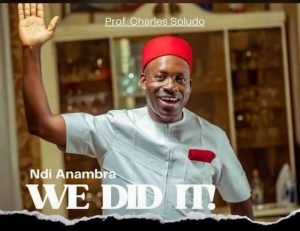
Soludo-New Governor Of Anambra State

10:10 PM 0
Soludo-New Governor Of Anambra State


Soludo-New Governor Of Anambra State

Soludo-New Governor Of Anambra State

Professor Chukwuma C. Soludo was born on 28th July, 1960, and hails from Aguata Local Government Area of Anambra State. After his secondary school education, he proceeded to the University of Nigeria, Nsukka, where he graduated with a first class degree in Economics. He also undertook his post-graduate and doctorate degrees in Economics from the same University winning on both occasions, the prize for the best graduating student.

Professor Soludo had cumulative four years of post-doctoral training in some of the world's most prestigious institutions, including: The Brookings Institution, Washington, DC; University of Cambridge, UK, as Smuts Research Fellow and Fellow of the Wolfson College; the UN Economic Commission for Africa as a Post-Doctoral Fellow; University of Warwick as a Visiting scholar and Visiting Research Scholar at Center for African Economies, University of Oxford (with funding by the Rhodes committee). He also attended over a dozen specialized courses and has had extensive research, teaching and consultancy works in different areas of economics.

He has worked at the World Bank both as a short and long-term consultant since 1993 and also at the United Nations Economic Commission for Africa, Addis Ababa. He was a consultant to UNCTAD; European Union (EU); Organisation for Economic Cooperation and Development (OECD); United Nations (UN) New York; United States Agency for International Development (USAID); African Development Bank (ADB); Common Market for Eastern and Southern Africa (COMESA); African Union (AU); International Development Research Council (IDRC) Canada; Council for the Development of Social Science Research in Africa (CODESRIA); Economic Community of West African States (ECOWAS); among others.

Professor Soludo has served as Senior Technical Advisor/Consultant as well as a Visiting Scholar at the IMF since 1994, and also taught IMF's Financial Programming and Policy course to senior staff of Central Banks in West Africa and other developing regions. He has served as: Member, Technical Committees that drafted economic and trade policies for the Federal Government of Nigeria; and Executive Director of the African Institute for Applied Economics (AlAE).

Professor Soludo joined the Federal Government of Nigeria in July 2003 as the Economic Adviser to President Obasanjo and the Chief Executive of the National Planning Commission (NPC). Among other accomplishments during the 10 months in office, he was the Chairman/Coordinator of the team that drafted Nigeria's economic and social reform program (2003-2007), the National Economic Empowerment and Development Strategy (NEEDS), and also pioneered the collaborative planning framework in the Nigerian federation by initiating and assisting state governments in designing their State Economic Empowerment and Development Strategy (SEEDS).

As Governor of the Central Bank of Nigeria since May, 2004, Prof. Soludo has refocused the Central Bank as an effective monetary authority and successfully implemented a fundamental restructuring which has led to unprecedented consolidation of the Nigerian banking system.

On account of this, the Nigerian banking system has been rated the fastest growing in Africa and one of the fastest growing in the world. He has also championed the establishment of the Africa Finance Corporation (AFC), a continental, private -sector driven, investment bank.

He is promoting the Financial System Strategy 2020 (FSS 2020), the blue-print to grow Nigeria's financial system to become Africa's financial hub and to drive the Nigerian economy into the global league of top 20 economies by 2020. For his achievements, Professor Soludo is the recipient of scores of awards and recognitions from civil society organizations; NGOs; private sector organizations; religious groups; the Press; professional associations; student unions; universities; among others.

The Financial Times of London has described him as Ita Great Reformer'. He is the winner of the 'Global and African Central Bank Governor of the Year, in 2005, 2006 and 2007 by different international media institutions including The Banker Magazine published by the Financial Times of London.

He is currently a Member of the International Advisory Group for the UK-DFID; a member of the Chief Economist Advisory Council of the World Bank and the International Advisory Group of the UK Department for International Development (DFID). He is also a member of the Initiative for Policy Dialogue (IPD), a global network of more than 200 leading economists, political scientists, and practitioners to help developing countries explore policy alternatives, and enable wider civic participation in economic policy making.

He holds Nigeria's third highest national honour of Commander of the Order of the Federal Republic (CFR). He is a Fellow of the Chartered Institute of Bankers of Nigeria (CIBN); Fellow of the Nigerian Economic Society (NES) and has been awarded D.SC (Honoris Causa) by the University of Calabar and also by the Federal University of Agriculture, Makurdi.
Professor Soludo is married to Nonye and blessed with children.

Barrister Shola Jegede Reporting for Delta Restoration media team.

Oct 26, 2021

CBN Releases Guidelines For ENaira

12:03 AM 0
CBN Releases Guidelines For ENaira


CBN releases guidelines for eNaira

Kindly share this story:
eNaira

Following the launch of the enaira by the President, Major General Muhamadu Buhari (retd.), the application for the digital currency introduced by the CBN has become available for download, with more than 5,000 downloads within hours of the launch.

This is as the apex bank released regulatory guidelines which stipulate that charges for transactions that originate from the eNaira platform will be free in the first 90 days commencing from October 25.

After this period, applicable charges as outlined in the Guide to Charges by Banks, Other Financial and Non-bank Financial Institutions will become effective.

The eNaira speedwallet app meant for individuals had at 4pm seen more than 5,000 downloads while the eNaira speed merchant wallet had seen close to 1,000 downloads.

According to the regulatory and issuance guidelines, banks will automatically be onboarded by the CBN while merchants will be onboarded once they download the app and individuals will have to onboard by themselves.

The guideline revealed that there would be different wallets for different stakeholders.

“The eNaira stock wallet belongs solely to the CBN and it shall warehouse all minted eNaira,” the guideline stated.

It said that financial institutions were expected to maintain one treasury eNaira wallet to warehouse eNaira received from the CBN eNaira stock wallet.

“Financial Institutions (FI) may create eNaira sub-treasury wallets for branches tied to it and fund them from its single eNaira treasury wallet with the CBN and FI may create eNaira branch sub-wallets for its branches.

“The eNaira branch subwallet shall be funded from the treasury eNaira wallet.

“eNaira Merchant speed wallets shall be used solely for receiving and making eNaira payments for goods and services. eNaira speed wallets shall be available for end users to transact on the eNaira platform.”

To ensure security of funds, the eNaira is expected to have two-factor authentication and other measures.

Meanwhile, daily transaction limits for Tier 0, which is just phone number without verified National Identity Number was set at N20,00 with a balance limit of N120,000.

Tier1 category, which has a verified number has an N50,000 transaction limit and N300,000 balance limit.

Tier2 and Tier3 categories have daily transaction limits of N200,000 and N1 million as well as a N500,000 and N5 million balance limits while merchants have no limit.

According to a circular signed by Mr Chibuzo Efobi, the CBN director Financial Policy and Regulation Department, the eNaira will compliment cash as a less costly, more efficient, generally acceptable safe and trusted means of payment and store of value.

“Additionally, it will improve monetary policy effectiveness, enhance government’s capacity to deploy targeted social interventions, provide an alternative less costly channel for collection of government revenue and boost remittances through formal channels.

“The guidelines seek to provide simplicity in the operation of the eNaira, encourage general acceptability and use, promote low cost of transactions, drive financial inclusion while minimizing inherent risks of disintermediation or any negative impact on the financial system,” it reads in part. 

Source- punchng

(NAN)