(adsbygoogle = window.adsbygoogle || []).push({ google_ad_client: "ca-pub-4846363302131893", enable_page_level_ads: true }); Kombackblog: Email Marketing

Kombackblog

kombackblog is one stop blog for all African news. Business, Fashion, Real Estate, Cars, Politics, World news, Culture, Electronics

Showing posts with label Email Marketing. Show all posts

Jan 11, 2025

How To Grow Your E-commerce Business Like A Pro

7:46 PM 0
How To Grow Your E-commerce Business Like A Pro


Top Strategies For Growing Your E-commerce Business

Understanding the state of e-commerce business today is crucial before implementing any particular tactics. With new trends and technologies appearing frequently, the industry is changing quickly. Advances in technology, such as augmented reality and AI-driven personalization, are changing how customers engage with online businesses. For convenience and variety, consumers are increasingly shopping online, and they anticipate a smooth, quick, and customized shopping experience. Therefore, maintaining a competitive edge requires keeping abreast of consumer trends and industry developments.

Additionally, because e-commerce is global, companies need to be ready to serve a wide range of customers with different tastes and buying habits. This calls for a deep comprehension of global markets and cultural quirks. Optimizing for mobile devices has become essential as mobile e-commerce business continues to grow. Businesses that embrace these changes can open up new avenues for growth and expansion, while those that don't run the risk of falling behind.


Optimizing Your Online Store

A successful e-commerce business is built on a well-optimized online store. It's not just about looks; Performance and usefulness are just as crucial. Key areas to concentrate on are as follows:


User-Friendly Website Design

Customers frequently interact with your e-commerce business for the first time through your website. Make sure your design is responsive to mobile devices, easy to use, and navigable. A disorganized or unclear layout may turn off potential customers. Conversion rates can be raised and user experience greatly improved with intuitive navigation, obvious calls to action, and an eye-catching design.

Think about the significance of accessibility as well. In addition to increasing your potential clientele, making sure your website is usable by everyone, including people with disabilities, shows that you value inclusivity. To reach a larger audience, include features like text size adjustments and screen reader compatibility.


Fast Loading Speed

The speed at which a website loads is essential to the user experience. High bounce rates and lost sales can result from slow websites. To speed up loading times, use caching, optimize images, and take into account a content delivery network (CDN). Even a small delay can discourage customers from finishing their purchases, so every second matters.

In addition to technical optimizations, conduct routine performance audits of your website to find any problems or bottlenecks that might be impeding it. Utilize tools that offer insights into metrics related to the user experience, and utilize this information to inform your improvements. In addition to improving user satisfaction, websites that load quickly also have a positive effect on search engine rankings, which increases visibility.


Leveraging Online Marketing

Retaining current customers and drawing in new ones depend on efficient marketing. Building a devoted clientele and expanding your reach are both possible with the correct tactics. Here are some tactics to think about:


Search Engine Optimization (SEO)

To increase the visibility of your online store on search engines, SEO is essential. Find out what your target audience is looking for by conducting keyword research, then adjust your product pages appropriately. To improve search engine rankings, use alt tags, meta descriptions, and descriptive titles for your images. To keep your content current and interesting, update it frequently.

Additionally, concentrate on developing a robust backlink profile and enhancing the architecture of your website to increase crawlability. If your company caters to particular regions, use local SEO techniques. You can sustain and enhance your visibility in search results by keeping abreast of changes to search engine algorithms and modifying your approach accordingly.


Social Media Marketing

Social media sites are great resources for interacting with consumers and increasing brand recognition. Establish a regular posting schedule, engage with your audience, and share insightful content. To reach more people, use paid advertising options. To increase engagement, adapt your content to the particular audience and culture of each platform.

Use social media analytics in addition to your regular posting schedule to find out what kinds of content your audience responds to the most. Utilize this information to hone your approach and concentrate on campaigns that generate the highest levels of interaction and conversions. To increase your reach and credibility, work with brand ambassadors or influencers.


Email Marketing

Email marketing is still one of the best strategies for building relationships with customers. By providing incentives like free shipping or discounts, you can grow your email list. Based on the preferences of the customer, send tailored emails with product recommendations. Divide up your audience to send more pertinent and focused messages.

Put in place automated processes for re-engagement campaigns, post-purchase follow-ups, and cart abandonment. In addition to saving time, these automated emails guarantee prompt communication with your customers. Test and improve your email campaigns often to increase conversions, click-through rates, and open rates.


Expanding Your Product Line

Increasing the variety of products you offer can boost sales and draw in new customers. A carefully chosen product line can differentiate your company and meet the needs of different types of customers. Take into account the following tactics:


Conduct Market Research

Utilize focus groups, surveys, or customer feedback analysis to learn about the needs and preferences of your target market. Make use of this information to find possible products that complement your brand. Examine industry publications and rival products on a regular basis to identify new trends and business prospects.

The process of conducting market research ought to be continuous. To remain current and appealing, keep improving your product line as consumer tastes and market conditions change. Make educated decisions about product expansion by using data analytics to forecast future trends.


Collaborate with Suppliers

Establish alliances with trustworthy vendors to increase the variety of products you offer. To keep your brand consistent, make sure that the new products are as high-quality as your current lineup. To guarantee a seamless supply chain process, negotiate advantageous terms and create effective communication channels.

To offer unique products, think about looking into co-branding or private labeling options with suppliers. These partnerships have the potential to increase the distinctiveness of your brand and give consumers something they won't find anywhere else. Strong supplier relationships also pave the way for cooperative marketing initiatives, priority service, and lower prices.


Introduce Seasonal or Limited-Edition Products

Sales can be increased by instilling a sense of urgency with limited-edition or seasonal products. Use your marketing channels to spread the word about these products in order to create demand and excitement. The fear of missing out (FOMO) engendered by limited-time offers can encourage impulsive purchases.

Additionally, seasonal collections can help you take advantage of special occasions and holiday shopping trends. Create captivating stories that connect with your audience and center your marketing campaigns around these occasions. Additionally, limited-edition products can be used as a test run for future permanent product line additions.


Enhancing Customer Experience

Creating a satisfying customer experience is essential to fostering repeat business and fostering loyalty. Customers that are satisfied with a brand are more likely to recommend it to others and spread good word of mouth. Put the following tactics into practice to raise customer satisfaction:


Streamlined Checkout Process

Reduce cart abandonment rates by streamlining the checkout process. Provide a clear progress indicator at checkout, a variety of payment options, and guest checkout options. The simpler a purchase is to complete, the better.

Test your checkout procedure frequently to look for any possible snags or technical problems. Incorporate functions such as address auto-completion and expedited payment choices for loyal customers. You can increase conversions by making the checkout process as easy and intuitive as possible.


Excellent Customer Service

Deliver outstanding customer service via a variety of platforms, including phone, email, and live chat. Answer questions right away and professionally and empathetically handle customer concerns. A prompt and supportive response can make a bad experience better.

Make an investment in educating your customer support representatives to effectively handle a variety of questions and problems. Put in place a strong feedback system to collect information from consumer interactions and utilize it to keep improving your offerings. Having a stellar reputation for customer service can help you stand out from the competition and win over repeat business.


Personalized Shopping Experience

To make the shopping experience more unique, use data analytics. Provide individualized discounts, develop focused marketing campaigns, and make product recommendations based on previous purchases. Customers are more likely to make a purchase when they feel appreciated and understood thanks to personalization.

Analyze consumer preferences and behavior in real time by utilizing machine learning algorithms. To improve the shopping experience, use personalized landing pages and dynamic content. Giving customers a customized experience boosts their satisfaction and strengthens their bonds with your brand.


Utilizing Online Marketplaces

You can reach a wider audience by extending your reach through online marketplaces. These platforms provide a reputable shopping environment and a well-established customer base. To get the most out of these platforms, follow these tips:


Choose the Right Marketplace

Look into and select online marketplaces that complement your target market and brand. Konga, komback, and Jiji.ng are popular choices. Make an informed choice because every platform has its own set of guidelines and costs. For a more focused strategy, take into account niche marketplaces that specialize in your product category.

Analyze the competitive environment, traffic volume, and audience demographics of the marketplace. Make sure the values and policies of the marketplace complement the ethos of your brand. You can reach the most relevant audience and increase your visibility by choosing the appropriate platforms.


Optimize Marketplace Listings

Optimize your marketplace listings with pertinent keywords, excellent images, and thorough descriptions, just like you would with your online store. Keep an eye on your performance and modify your plan in response to sales information. To improve your listings and increase their efficacy, use A/B testing.

To maintain the best listing performance, stay up to date on changes to the marketplace algorithm and recommended practices. Interact with client testimonials and reviews to establish credibility and trust. Update your listings frequently to reflect the most recent prices, promotions, and inventory.


Leverage Marketplace Promotions

Benefit from marketplace promotional opportunities, such as sponsored goods or temporary sales. These can increase your exposure and draw in new customers. To take advantage of the increased traffic, take part in marketplace-wide events such as sales or holiday promotions.

Track the effectiveness of your promotions and modify your plan of action in response to the outcomes. Examine which promotions result in the highest levels of engagement and conversions, then improve your strategy for upcoming campaigns. By strategically utilizing marketplace promotions, you can increase your customer base and spur substantial growth.


Conclusion

A strategic approach that integrates marketing, product expansion, optimization, and customer satisfaction is necessary for the growth of an e-commerce business. You can set up your online store for success in the cutthroat world of e-commerce by putting the tactics described in this article into practice. Recall that the secret to long-term success is constant improvement and adjustment to market trends. To succeed in the rapidly changing world of e-commerce, stay proactive, welcome innovation, and maintain a customer-centric mindset. As you proceed, remain receptive to investigating novel prospects and enhancing your tactics to accommodate your customers' evolving requirements.


By kingkentus


Nov 18, 2024

Common Pitfalls In Facebook Ads And How To Avoid Them

3:04 AM 0
Common Pitfalls In Facebook Ads And How To Avoid Them


Common Pitfalls In Facebook Ads And How To Avoid Them

There are lots of common pitfalls with Facebook ads. They’re focusing on the wrong things, which leads to poor results. It may be because Facebook’s ad platform, especially Ads Manager, is pretty complex. Meta has added more features over the years, giving advertisers extra control and flexibility, which advanced advertisers may appreciate. But this can also make it confusing, even for experienced advertisers.


The result of this is that many advertisers get caught up in all the choices: "Should I run this type of campaign?" "What setting should I use?" "Should I try this new option?" This leads them to spend time on things that don’t really matter or that have only a minor impact. And because time and budget are limited, spending effort in the wrong places hurts their chances of success.


In this article, we’ll cover the common pitfalls in Facebook Ads and how to avoid them and the five most important things to focus on in Facebook and Instagram advertising. If you get these five things right, you’ll see better results.


Common Pitfalls In Facebook Ads And How To Avoid Them


  1. Having No creative Testing


One common pitfall that many advertisers make is not having enough creative testing. Today, the most important work in your Facebook ads comes from testing new creative ideas. This means trying different concepts, angles, formats, and anything else you can think of based on what you know about your audience.


Here’s how to structure your testing for success, and this is what we use to help clients scale from $1 to $1,000 per day in just 60 days. The structure is simple: you start with one main CBO (Campaign Budget Optimization) campaign. Inside that campaign, you’ll add new ad sets every week. Ideally, you’ll add one or two new tests each week. If you have a bigger budget, you can test more frequently.


Remember, if you add five or ten ad sets each week, they won’t all get much spend. That’s why adding just one or two new tests each week works best. For each test, you should create three different ads. If you have a bigger budget, you can make smaller changes to the creative—like adjusting the headline or colors. Even small tweaks can show noticeable results when you're spending a lot.


On the other hand, if your budget is smaller, you’ll want to make bigger changes in your tests. For example, you might change the entire image while keeping the headline the same, or try different benefits with the same image. The key is to make noticeable changes that stand out, not just tiny adjustments.


Lastly, inside each ad, make sure to include at least two different headlines and two primary texts. This gives Facebook more options to test within each ad, so you don’t have to create multiple ads. Instead, you’ll have multiple variations within a single ad, increasing the chances of finding what works best.


Another important tip is to make sure you spend at least $5 to $10 on each ad set. This helps make sure Facebook gives your new tests a fair chance to perform. Often, Facebook will favor the ads that are already performing well and spend more on them, which limits your ability to test new ideas. You don’t want to waste money, but you do want to give new ads some budget to see if they can become successful. Spending $5 to $10 on each test gives Facebook enough data to decide if the ad will do well and if it deserves more budget.


When managing your testing, if an ad doesn't make any sales after 4 or 5 days, depending on your target CPA (Cost Per Acquisition), you should cut it. Or if it makes sales but costs too much (like 3 times your target CPA), you should stop it. Repeat this process every week to keep your testing organized and efficient.


This is the first and most important step. Many brands skip this and just add ads to a campaign without proper testing, then wonder why they’re not getting good results. You need to put in the effort and test new ads weekly to improve your campaigns.


  1. High View Conversion


Next, let's talk about high view-through conversions. So, what are view-through conversions? These happen when someone sees your ad but doesn’t click it. Later, they convert through another action, like an email, and Facebook still credits the sale to the ad. However, this isn’t always the real reason they made the purchase.


The issue with this is, if you're running email marketing at the same time, many repeat customers may show up. With one-day view conversions, Facebook might count these as conversions from the ad, which can falsely improve your return on ad spend (ROAS) and lower your cost per acquisition (CPA). This can make your results look better than they actually are, because it’s hard to tell whether the sale came from the ad or from your email campaign.


To fix this, go to the ad set level and find the "attribution setting." Change it from one-day view to only 7-day click for all your campaigns. For most brands, this will give you the most accurate results. If you're spending millions on ads, you might use one-day view, but for most businesses, 7-day click is better. This will help you get a clearer picture of how well your ads are really performing.


  1. No existing customer exclusion


Another common pitfall is that many brands don't exclude existing customers when running ads. This is important because excluding customers allows you to focus on getting new ones. Most businesses are trying to get new customers, while keeping current ones engaged through methods like email, SMS, and social media. But sometimes Facebook targets your current customers instead, since they're more likely to buy again.


You don't want this to happen because it keeps you from reaching fresh customers. To make sure you're targeting new ones, go to the ad set level and click on "Click to Original Audiences." Facebook will try to push you to Advantage Plus audiences, but click to the original audiences instead. Then, you'll add a custom audience using the purchase pixel (set to 180 days, which is the max Facebook allows) and a customer list from your email software, like Klaviyo. This will ensure your ads are reaching new customers, not just repeat buyers.


The great thing about this setup is that it updates daily, so your ads will automatically exclude customers who have already purchased from you, without any extra effort on your part. It's important to use both your Pixel and Klaviyo lists to make sure you're targeting new customers as much as possible. Facebook won’t catch every existing customer, but using both tools together will help you reach more new people and fewer repeat buyers.


In the Facebook ads platform, you’ll see a breakdown of how many of your ads are reaching new customers, existing ones, and those Facebook can’t track. To connect Klaviyo with Facebook, go to the "Integrations" section in Klaviyo, link your Meta ad account, and then add a custom audience sync. This sync will automatically connect to Facebook, and it’s a simple, one-time setup. Once it’s done, you won’t need to repeat it.


  1. Lack Of Optimization


Lack of optimizing their Ads is another common pitfall brands make. Sometimes, people think they shouldn’t change anything in their ads, but this can hurt performance. It’s important to make improvements on a regular basis, like cutting ads that aren't working, increasing budgets for ads that are performing well, and testing new ideas. You should be doing this every week in a planned and organized way.


Here’s a simple way to do this:


  1. Has the ad been running for 7 days?


- If no, check if it’s getting any sales. If it’s getting sales, let it run. If not, check if it has any spend. If yes, and it’s still not doing well, you can cut it. If there’s no spend, let it run for more data.


- If yes, check if it’s getting any spend. If it has no spend, let it run. If it has spend, check the cost per sale (CPA). If it’s under your target, you can increase the budget. If it’s above the target, cut the ad.


By following this simple structure, you can make decisions based on actual data and avoid wasting money on ads that aren't working.


  1. Too many campaigns


Finally, let’s talk about having too many campaigns. I always recommend simplifying your setup with account consolidation. Most brands can run their ads under one campaign, not five. The way to do this is by having just one CBO (Campaign Budget Optimization) campaign and adding new ad sets each week to test. There's no need to over complicate things. Having too many campaigns makes it harder to manage and figure out what's working. Plus, your budget gets spread too thin.


By keeping everything in one campaign, Meta will automatically adjust the budget based on what performs best. It’s much easier this way and helps you get better results.

So, keep it simple. Stick with one campaign for most of your ads.


Five Most important things to focus on Facebook Ads

One thing is to avoid pitfalls, another thing is to start doing things that will help your Facebook. So, let's look at some important things to focus on Facebook Ads.


  1. performance goal


Many Facebook advertisers focus a lot on picking the right campaign objective, thinking it’s the most important part. But actually, the campaign objective mainly affects which options you’ll see for something even more important: the performance goal.


The performance goal tells Meta what you really want from your campaign. It’s what you’re optimizing for—what outcome you’re hoping to achieve. But it’s not always obvious. Depending on your chosen campaign objective, you’ll see different performance goal options. For example, if you choose the “Leads” objective, you might have the option to optimize for “Get as many conversions or leads as possible.” This is usually the best choice for a leads campaign, but you could also pick goals like “Get as many link clicks as possible” or “Get as many landing page views as possible.”


Now, here’s an interesting part: if you set a leads campaign to optimize for link clicks, it’ll work the same way as a traffic campaign also set to optimize for link clicks. In this case, there’s no advantage to using a leads campaign over a traffic campaign. So, it’s really the performance goal that makes the difference, not the campaign objective itself.


When you’re setting up Facebook ads, it’s crucial to make sure your performance goal actually matches what you want. For instance, if you’re running a "Leads" campaign, aim to get as many leads as possible. If it’s a "Sales" campaign, you’ll want to focus on getting as many purchases as possible or maximizing your return on ad spend (if your account setup allows for that kind of tracking).


The performance goal you choose isn’t a small detail—it’s incredibly important. Meta’s algorithm is very good at finding people likely to take the specific action you’re looking for. If you tell Meta you want link clicks, you’ll probably get lots of them, often at a low cost. But will those people actually become leads or make purchases? Often, no. But if you set your goal to "leads" or "sales," Meta will try to find people who are more likely to take those actions instead.


Choosing the right performance goal can lead to a huge difference in results—sometimes even doubling the effectiveness of your campaign. For example, a "Leads" campaign set to optimize for leads usually performs much better than a traffic campaign or a "Leads" campaign set to optimize for clicks, especially when comparing cost per lead or total leads on the same budget. So, it’s essential to select a goal that truly fits your business aim.


To keep it simple, pick a goal that reflects what you really want. If you want leads, set it for leads. If you’re aiming for sales, set it for sales. Or if you just want to reach a wide audience, it’s fine to use an "Awareness" campaign with a goal like "maximize reach." Just remember to ask yourself, "What’s my main goal here?" and set your performance goal to match that.


  1. Tracking the actions that people take


The next key to success with Facebook and Instagram ads is being able to track what people do after they click on your ad. Do they go on to make a purchase? Do they sign up as a lead? Which pages do they visit? Tracking these actions is essential.


For your performance goal to work—like optimizing for leads or sales—Meta needs to know what a lead or sale looks like on your website. Without proper tracking, you won’t have accurate data to see which ads are doing well, and Meta won’t be able to adjust to get you more of the actions you want. You’ll miss out on opportunities to turn off under performing ads, boost the effective ones, and improve your results.


To get this tracking right, make sure you have both the Facebook pixel and the Conversions API installed on your website. These tools help you track important actions, allowing Meta’s algorithm to work better and giving you the data you need to make good decisions.


Accurate tracking benefits you as an advertiser and helps Meta’s system optimize more effectively—both of which can make a big difference in your campaign results.


  1. Offer


One of the most important parts of any Facebook or Instagram ad campaign is the offer itself—what people get when they take the action you want, whether that’s buying a product or signing up for a service. How you present that offer, how appealing it is, and how you package it make a huge difference.


The reason the offer matters so much is simple: even if your ad setup isn’t perfect, a strong offer can still bring in good results. On the other hand, if you’ve optimized everything but the offer doesn’t grab people’s interest, the campaign will probably fall flat.


Let’s go over some quick examples to help you improve your offer. Often, when someone asks for advice on why their ads aren’t working, the answer may be that their offer might not be compelling enough. So here are some ideas to consider as you work on making your offer more enticing.


HOW TO IMPROVE YOUR OFFER


One of the best examples of how powerful a good offer can be was with a client selling a product that cost about £3,000 to install in people’s homes. The ads were supposed to generate leads for sales calls and focused on benefits like top-notch customer service and professional installation.


The results were decent, but not amazing. Then, a huge change was made by offering a finance option. Instead of saying, “This is the total cost,” we highlighted that customers could get this product for just £9 a week, spread over a long period—about six years. Plus, installation could happen within 48 hours of inquiry, making it fast and hassle-free.


This new offer totally transformed the campaign. By focusing on affordability and speed, we made the offer much more attractive, and the results were incredible.


When we switched the offer, that campaign took off. Instead of just saying, "This is a great product," we changed it to: “Here’s a finance option, pay just a small amount per week, it’s cheaper than you thought, and installation happens within 48 hours.” That made the offer so much more attractive, and the leads started pouring in. We had to pause the campaign several times because the business couldn’t keep up with the number of leads.


Another way to improve your offer is by adding something new and unique to your product or service—something no one else is offering. If customers see that your product can do something special, it can catch their interest and lead to more sales.


For services, offering a guarantee can also be a game-changer. When you tell customers, “We guarantee results or you don’t pay,” or “We’ll keep working with you until you get the result you want,” it shows confidence in what you offer. This can greatly increase your lead or sale rate.


Think about your offer carefully. Making small improvements can dramatically increase your results, often in no time at all. If you can make your offer better, you could see a huge boost in performance for your Facebook and Instagram ads.


  1. Lifetime customer value


Many Facebook advertisers are so focused on tweaking their campaigns—trying to reduce costs by a dollar here or improve their cost per lead by a small percent—that they overlook a much bigger opportunity.


There’s only so much you can lower your cost per conversion once your ads are performing well. But there’s a lot more room to grow your lifetime customer value. In fact, it’s often easier to double how much each customer spends with you over time than to cut your ad costs in half.


By focusing on increasing lifetime customer value, you can see a huge impact on your return on ad spend (ROAS), even if your ad campaigns stay the same. Doubling customer value doubles your ROAS, which strengthens your business. It also helps you handle challenges like dips in ad performance or increased competition, since you’ll be making more per customer than before.


So, instead of putting all your effort into squeezing small improvements from your ad costs, think about ways to encourage repeat business or increase the average customer spend. It’s one of the most powerful ways to boost your results and keep your business strong.


There are several ways to increase lifetime customer value. One powerful method is through referrals. If your product or service is excellent, customers are more likely to recommend it to others. Knowing that each new customer could bring in another through word-of-mouth can make your ad campaigns even more profitable.


Another approach is to focus on repeat purchases. High product and service quality is crucial, but so is staying in touch with customers. You can use retargeting ads, email follow-ups, SMS marketing, or other strategies to keep customers engaged and encourage them to buy again.


A subscription model can also be effective, bringing in recurring revenue. And you might consider simply charging more for your product or service if you can offer added value to justify it. Offering cross-sells and upsells—additional products that your customers may like—can also increase customer spending over time.


Many Facebook advertisers overlook these tactics, but increasing customer value can make a big impact. If you can triple the value of each customer, you can afford to spend more on acquiring new customers and still come out ahead. In general, this can lead to a much more profitable business.


  1. Ad Creative


The ad creative is what your audience actually sees—it’s the images, videos, and text that grab their attention (or don’t). While some advertisers focus heavily on adjusting account settings, these settings are becoming less crucial as Facebook automates more of the process. What really matters is how the ad looks and feels to potential customers.


A good ad creative can make people think, “This looks interesting; I want to know more.” It creates a strong impression of your brand and can make a huge difference in results.


It's important that advertisers invest more time and money into high-quality creative. Many advertisers pour most of their budget into running the campaign itself but spend very little on creating compelling visuals or messages. Sometimes, just taking a small portion of your ad budget—say, 10%—and using it to hire a professional designer, photographer, or video editor can greatly improve your results. High-quality creative can make a big difference in how people respond to your ads.


If you spend just 10% of your ad budget on improving your creativity, will you see better results? Yes, absolutely. It’s common to see improvements of 30%, 40%, or even more—sometimes even up to 60%—just by upgrading the quality of your ad creative. So, the money spent on better creative will quickly pay off.


Conclusion

To make your Facebook Ads more successful and profitable, start by avoiding these common mistakes and applying the suggested fixes. Regular testing, optimizing, and analyzing are key to getting great results.

Need expert help to boost your Facebook Ads performance? Book a discovery call with us, and our team will work with you to create a strategy that fits your business goals.


By kingkentus

Nov 15, 2024

How To Market Your Products Effectively

1:00 AM 0
How To Market Your Products Effectively


How To Market Your Products Effectively

Many new business owners are struggling how to market their products effectively. They post a product picture on Instagram, add random hashtags, list a price, and say “buy now”—hoping customers will come running to buy. But when that doesn’t happen, they feel frustrated, lost, and desperate.

In this article, we’ll go over five simple marketing tips that can help you make a real difference in your business success.


Simple Tips To Market Your Products Effectively


  1. Sell An Experience, Not Just A Product.


When you sell a product, it's important to think about the entire experience you’re creating for your customer. For example, if you own a hair company, you should focus on giving customers a full experience before they make a purchase. Don't just show them hair bundles; also ask questions like, “How long do you want it to be?” “What color are you looking for?” and “What kind of curls do you like?” This way, you could find the best match for each customer.

Also, let customers try on the wigs. Don't just hand it to them; place it on their head and style it based on what they want. This will give them a “before and after” experience that felt like a mini-makeover. Seeing the transformation often encouraged them to buy the wig they tried on or to order one customized for them.

Now, that works in a physical store, but what about online businesses? The best way to offer a similar experience online is through video. For example, if you sell wigs, you could make a before-and-after video. Show how a person looks before wearing the wig, then show the change once they have it on.

Another way to make great marketing videos is by showing how your product is made. For example, if you sell wigs, you could film short clips that show each step, like laying out the hair bundles, sewing the wig on a mannequin head, and finally showing the finished product. This gives potential customers a behind-the-scenes view and builds their interest in buying from you.

You could also make videos demonstrating how to market your products. Using wigs as an example, you could show different ways to style the same wig, or the range of colors and curl types available. This helps people see the versatility of your product.

If you sell food items, like jam or honey, you could make videos showing creative ways to enjoy them. Let’s say you sell egusi soup. You could make a video on different ways to serve it—like with rice or different traditional foods. By showing unique ways to use your product, you make it more appealing and can even justify a higher price than competitors.


  1. Sell The Benefits, Not The Features Of Your Product.


Customers care most about how a product will improve their life. They’re always thinking, “What’s in it for me?” They aren’t focused on how great your product is on its own—they want to know what it will do for them. So, try to paint a picture of what life is like when you market your products effectively, showing the positive impact it can have.

A great example of this approach is how Apple launched the iPod. Instead of saying it had “5 GB of storage,” they simply said, “1,000 songs in your pocket.” This wasn’t about the tech specs; it was about a new, exciting experience: having your music collection with you anywhere.

You don’t need to promise life-changing results to show a benefit. Let’s say you sell perfume. Instead of just describing the scent, you could talk about how people will compliment the buyer on smelling nice or how wearing a great fragrance can boost their confidence. By focusing on the benefits, you make the product feel more valuable to your customers.


  1. Move People Further Away From Pain Or Take Them Closer Towards Pleasure.


Another helpful tip is to show how your product either solves a problem or brings extra joy. Most customers have a specific need or a desire they want fulfilled. When you talk about how to market your products, highlight how it addresses that need. For instance, if you run a delivery service, you’re helping businesses to market your products to customers, and you’re also helping customers who prefer the convenience of delivery instead of going to a store.

However, not every product is about solving a problem. Luxury items—like high-end fashion, art, or designer accessories—are often bought for the enjoyment they bring, not because they fill a specific need. If you sell something like this, focus on the pleasure or excitement people feel when they own your product.


  1. Know That Selling Is An Exchange Of Value.


It’s important to remember that selling is really an exchange of value. Both the buyer and the seller gain something from the transaction. No one is taking advantage of the other; instead, both are trading something valuable. For example, if you want a dress and you meet someone that have one, you pay them money, and in return, they give you the dress. It’s a fair exchange where each side gets what they want.

The more your customer feels that they’re receiving value from the deal, the more likely they are to buy from you—and to keep coming back for more.


  • Do Not Compete Based On Price, Compete Based On Value.


Here’s an example to show why selling quality matters.

Let’s say you sell handbags, and a customer asks why yours cost 8,000 when they can get a bag for 2,000. You can explain that cheaper bags may not last and that they might end up spending more than 8,000 buying replacements. By investing in a quality product, they could use the same bag for several years.

In the end, customers care about getting value for their money. They want to know why they should pay a higher price, so instead of focusing on selling cheap products, focus on selling quality. Then, explain to customers how that quality benefits them in the long run.


How To Market A Digital Product


  • Strategy Number 1: Email Marketing


Even today, email marketing remains a powerful tool, and with email automation, you can set up a system that markets and sells for you even when you're not working.

For most digital products, a lead magnet is a great way to encourage people to join your list. Once they sign up, a 5-email drip sequence can help guide them toward buying. A "drip sequence" means a series of five emails that are automatically sent to each new subscriber on a set schedule. Each email is crafted to build interest, so by the fifth one, the reader is more likely to make a purchase.

Here’s a simple guide to what each of the five emails should do in your sequence:

- Email 1: Say Hello and Spark Interest – Start with a friendly introduction to yourself and ask a question that touches on a problem they might be facing. This helps build a connection right from the start.

- Email 2: Share Useful Tips – Now, offer some helpful tips or advice that relate to the problem you mentioned earlier. This shows your new subscriber that you’re here to help and have valuable insights.

- Email 3: Introduce Your Solution – By now, they see you as knowledgeable and trustworthy, so it’s a good time to introduce your product as a solution to their problem. Keep it casual; you’re not pushing them to buy just yet but letting them know your product could be the answer.

- Email 4: Address Concerns – Use this email to address any doubts or questions they might have about your product. This way, you’re helping clear up anything that might keep them from making a decision.

- Email 5: Make the Final Offer – If they’ve read through all your emails, they’re likely interested. This is the time to make your best offer and encourage them to buy.

To make this work well, schedule the first email to go out right after they sign up. The others should follow every couple of days, or even daily if you prefer. Don’t wait too long; many people are ready to buy shortly after joining your list, so keep the momentum going.


  • Strategy Number 2: Guest Post


Guest posting for a website or another creator with a strong following is a smart way to reach a new audience. This approach can help you grow your email list and even sell your digital product.

Start by finding creators or publications with followers who are similar to your target audience. The closer their audience is to yours, the more likely you are to connect with new people who find value in what you offer. When you reach out, make it clear that your goal is to give their audience useful content. Even if it’s not a direct promotion, pointing them to helpful resources and people (like you!) adds value.

Offer your help without any strings attached. Most of the time, the person or publication you’re posting for will allow you to introduce yourself and share where people can find you online. Sometimes they’ll even invite you to make a sales pitch. Don’t expect this, but be prepared to promote yourself if you get the chance.

Don’t just aim for big influencers. While connecting with someone who has hundreds of thousands of followers is great, studies show that guest posting often works best with micro-influencers (those with audiences between 1,000 and 100,000 followers). Building connections for guest posting takes time, so don’t get discouraged if you don’t get immediate results.


  • Strategy Number 3: Host a Free Webinar


One great way to sell your digital product is by hosting a webinar. Webinars let you interact directly with people, giving them useful information for free and encouraging them to buy by the end of the session. Here are some quick tips to making exciting webinars:

- Attract people to your webinar by promising to help with a small problem related to what you offer.

- Make sure to deliver on that promise during your presentation.

- Show how your product can address an even bigger or related issue.

- Offer a special discount or bonus for anyone who purchases during or soon after the webinar.

Live webinars are highly engaging, but recorded webinars can work just as well as a sales tool and can even be sold as digital products themselves.


  • Strategy Number 4: Get Customer Reviews


Getting reviews is key for building trust with potential customers, but what if you haven’t made any sales yet? Simple: try a “beta version.” Start by inviting a small group of 15-20 people—friends, family, or people in your audience who match your ideal customer profile. Offer them early access to your digital product in exchange for honest feedback.

Most people will be excited to try it out and willing to give a review, though you might need to follow up to encourage them. When you ask for reviews, request specific details about their experience and examples of how your product helped them or solved a problem. These reviews are valuable assets that you can use on your social media, in emails, in webinars, and especially on your sales page—where we’ll go next.


  • Strategy Number 5: Build a Sales Page


You don’t have to wait until your product is done to create a sales page—or even to start making sales. Here are some key elements to consider beyond a big, bold “buy” button:

Product Description – Describe your product in terms of the problem it solves for your audience. Show how it can make a difference for them.

Testimonials – Positive reviews from others help new customers feel confident about their decision.

FAQs – Address common questions and concerns here to help clear up doubts potential buyers might have.

Creator Bio – This isn’t just about you; it’s about how you discovered the problem your product solves and why you’re the right person to offer this solution.

Email Sign-Up – Some visitors may not be ready to buy, but they might be interested later. An email sign-up lets them stay connected so

you can keep them updated.


Conclusion

Promoting your new product or service effectively starts with knowing where your audience spends time online and how they interact there. However, it’s always a good idea to market your products across several channels. The more consistent and connected your messaging is, the more familiar your audience will become with your offer, leading to higher engagement.

Use the strategies we’ve shared here to help boost the success of your next product launch, software update, or new service. And if you’d like extra support, consider trying our digital marketing solutions.


By kingkentus


Aug 12, 2024

Strategies For Success In Online Retail

10:02 PM 0
Strategies For Success In Online Retail


STRATEGIES FOR SUCCESS IN ONLINE RETAIL

Online retail has changed how businesses operate since the pandemic, making e-commerce even more important. Now, businesses can sell products or services online anytime, reaching more people and offering a personalized shopping experience.


Recent statistics predict that e-commerce sales will grow by 10.4% in 2023, with 20.8% of retail purchases expected to be made via online retail. This rise in online retail shopping gives businesses a chance to boost sales and revenue by building a strong online presence.


In this blog post we’ll cover strategies for success in online retail and how to create a strong brand and website to using social media and improving search engine performance.


The Rise Of New Technologies


New technologies are changing the e-commerce industry. AI, blockchain, and voice assistants can help make shopping more personalized, improve customer support, and automate tasks. To use these technologies well, businesses need to focus on using data to make decisions, enhancing personalization and customer experience, and ensuring security and privacy. Adding security and data protection measures can also make e-commerce sites more trustworthy.


The Importance of Having an Online Retail Marketing Strategy

Online retail is changing, and e-commerce is growing quickly. Although e-commerce is still a smaller part of online retail, its rapid expansion shows where the industry is going.


Smart online retailers understand that having a good online marketing strategy is essential. This allows them to reach tech-savvy customers whenever and wherever they shop. They’re no longer limited by location or store hours and can connect with customers on their own terms.


Retailers who don’t have a digital strategy will miss out on this growing market. By running targeted online campaigns, they can benefit from the rise in e-commerce.


Strategies For Success In Online Retail


  1. Boosting Traffic to Your E-Commerce Site with SEO


SEO, or search engine optimization, helps your website appear higher in search results. This can bring more visitors to your site, make your brand more visible, and build your trust with customers.


  1. Improving Customer Experience and Loyalty with Personalization and Service


Making your customers feel special and providing great service can increase their satisfaction and loyalty. Offer personalized product recommendations, send tailored emails, and adjust your website content to fit individual preferences.


  1. Creating a Strong Brand and Unique Value Proposition


Your brand helps you stand out from your competitors. It’s important to build a strong brand identity and a unique value proposition (UVP) to attract and keep customers. Think about who your target audience is, what your brand stands for, and what makes you different when creating your brand strategy.


  1. Building an Effective E-Commerce Website


Your website is the core of your e-commerce business. It should be fast, easy to use, and attractive. To make your website successful, work on improving its speed, making it user-friendly, and using relevant keywords for better search engine results.


For example, improving mobile speed by just 0.1 seconds can lead to about 9.1% more shoppers adding items to their cart.


To enhance your website’s performance, use this checklist:

- Speed Up: Reduce image sizes, limit HTTP requests, and use a content delivery network (CDN).

- User Experience: Make navigation simple, use clear calls-to-action, and streamline the checkout process.

- SEO: Use long-tail keywords, research keywords, and optimize your product pages and blog content.


  1. Using Social Media to Grow Your E-Commerce Business


Social media is a strong tool for e-commerce. Use it to connect with customers, increase brand awareness, and drive traffic to your site. Social media ads can also help target specific groups and promote your products.


  1. Increasing Sales with Upselling and Cross-Selling


Upselling and cross-selling can help you boost revenue. Upselling means encouraging customers to buy a more expensive item, while cross-selling suggests related products they might like. You can also bundle products or offer discounts on related items.


  1. Making Your Operations More Efficient


Being efficient is key to success in e-commerce. To improve, businesses should think about automating tasks, cutting down on inventory costs, and streamlining their supply chain.


Using e-commerce platforms like komback can help automate the supply chain, manage inventory, simplify payments, and boost customer engagement with marketing tools.


Which E-commerce Platform Is Best For Your Business?


Different e-commerce platforms like komback, WooCommerce, and Magento have various features to help businesses create and manage online stores.


Here’s a look at the advantages and disadvantages of komback:


Pros: It’s user-friendly, free, perfect for beginners, has many features and customization options, offers good customer support, and works well with other apps.


Cons: percentage fees can apply.


Different e-commerce platforms offer various benefits and challenges. Here's a closer look at WooCommerce and Magento:


WooCommerce:


Pros: It’s free, open-source, and works well with WordPress sites. You can customize it with many plugins and themes, and you have full control over your store and data.


Cons: Setting up and customizing WooCommerce requires technical skills. You might need to buy extra plugins for some features, and it can slow down if you have a lot of products.


Magento:


Pros: Magento is highly scalable and customizable, making it great for large businesses. It offers many features and extensions and has strong community support.


Cons: Magento can be expensive and complex to set up and maintain. It requires technical knowledge, and page loading can be slower.


Best Practices for Implementing E-Commerce Strategies


Implementing e-commerce strategies isn't a one-time task. It needs ongoing effort, and businesses must stay flexible to adjust to changing market conditions.


Here are five best practices for doing this effectively:


  1. Understanding the Market and Competition


To succeed in e-commerce, businesses need to know their target market and competitors. Doing market research and competitor analysis gives insights into customer preferences, market trends, and areas where there might be opportunities. This information helps in creating effective marketing strategies and standing out from competitors.


Here are some ways to do market research and competitor analysis:


  1. Surveys: Use online tools to collect feedback from customers about their preferences and opinions.


  1. Social Media Listening: Monitor social media to understand what customers are saying and what they like.


  1. Website Analytics: Use tools like Google Analytics to learn about customer behavior on your website and make improvements.


  1. Competitor Analysis Tools: Tools like SEMRush or Ahrefs can help you study your competitors and find ways to set yourself apart.


  1. Focus Groups: Gather a group of people to discuss a product or service to get detailed feedback on what they think.


  1. Choosing the Right E-Commerce Tools


Selecting the right tools and technology is important for smooth operations and better insights into your e-commerce performance. This includes platforms for online stores, analytics tools, marketing automation, and customer service software.


For example, Google Analytics tracks website traffic and user behavior, while tools like Mailchimp and HubSpot help automate marketing and target campaigns.


If you need help finding the right tools, TBS Marketing can help you choose the best solution for your needs.


  1. Understanding Your Target Audience


To create effective e-commerce strategies, you need to know who your customers are and what they want. Understand their likes, problems, and buying habits. This helps you adjust your products, messages, and user experience to better match their needs.


For instance, if you sell skincare products, identify common issues like acne, dry skin, or wrinkles. Knowing these problems allows you to tailor your messages and products to address them. You can then create marketing campaigns that directly address these issues, showing how your products can help. This approach can boost engagement and sales.


  1. Setting Clear Goals and Metrics


To track the success of your e-commerce strategies, set clear goals and metrics. Goals might include increasing website traffic, boosting sales, improving customer satisfaction, or growing revenue. Clear metrics help you measure progress and make data-driven decisions to adjust your strategies.


  1. Regularly Review Your E-Commerce Performance


You should often check how well your e-commerce site is doing. Look at website traffic, conversion rates, bounce rates, and customer satisfaction. This data shows what’s working well and what needs to change. Use these insights to improve your strategies and make your e-commerce efforts more successful.


Choosing the right platform depends on your specific needs, budget, and technical expertise. It's crucial to thoroughly research and compare different options before deciding.


In summary, having a solid e-commerce strategy is vital for success in today’s market. Businesses that focus on these strategies can gain a competitive edge and increase their chances of thriving in the fast-paced world of online retail.


By kingkentus

Jun 10, 2024

Digital Marketing For Nigerian E-commerce

10:14 PM 0
Digital Marketing For Nigerian E-commerce


Digital Marketing For Nigerian E-commerce

Digital marketing means creating and sharing content through digital channels to promote brands, sell products or services, and engage with customers.

Digital marketing in Nigeria involves creating and sharing content through digital media channels to promote brands, sell products or services, and engage with customers. The evolution of digital marketing in Nigeria has been driven by the increasing number of internet users, the rise of social media, and the growth of e-commerce. Businesses in Nigeria can leverage various digital marketing channels to reach their target audiences, but they also face challenges such as the lack of infrastructure, limited access to finance, and a complex regulatory environment.

In Nigeria, digital marketing has grown a lot in recent years. Businesses use different digital channels to connect with their target audiences. This growth is due to more internet users, the rise of social media, and the growth of e-commerce. These factors help businesses reach and engage with their audiences more personally.

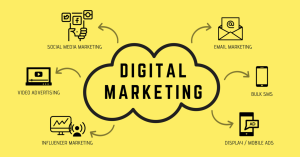
Digital marketing channels in Nigeria include social media, email marketing, search engine optimization (SEO), search engine marketing (SEM), content marketing, and mobile marketing. These channels give businesses various ways to connect with customers and grow.

Technology plays a big role in digital marketing. It helps businesses collect and analyze data to understand their customers better and create targeted marketing campaigns. However, there are challenges, such as poor infrastructure, limited access to finance, and complex regulations. Despite these challenges, the future of digital marketing in Nigeria is promising, and businesses that use digital marketing can gain many benefits.


Digital Marketing Channels

Digital marketing in Nigeria uses various channels to promote products and services online. These include social media marketing, search engine optimization, email marketing, and content marketing. Each channel has its own features, advantages, and disadvantages.


  1. Social Media Marketing

Social media marketing uses platforms like Facebook, Twitter, Instagram, and LinkedIn to promote products and services. This is popular in Nigeria because many people use social media. It helps businesses reach a large audience, engage with customers, and build brand awareness. It is also cheaper than traditional advertising.


  1. Search Engine Optimization

Search Engine Optimization (SEO) is about improving a website to rank higher in search engine results. This is important in Nigeria because it helps businesses get more online visibility and traffic. SEO includes on-page optimization, off-page optimization, and technical optimization. It requires understanding search engine algorithms and user behavior.


  1. Email Marketing

Email marketing uses email to promote products and services. It is effective in Nigeria because it allows businesses to reach customers directly. It can be used for newsletters, promotional offers, and keeping customers engaged. A well-targeted email list and engaging content are essential for success.


  1. Content Marketing

Content marketing creates and shares valuable content to attract and keep a target audience. This is popular in Nigeria as it helps businesses become thought leaders and build trust with customers. It includes blog posts, videos, infographics, and e-books. Understanding the target audience and their needs is crucial for effective content marketing.

Digital marketing channels are essential for businesses in Nigeria to reach their audience and promote their products and services online. Each channel has unique features and requires specific skills to be effective. Businesses should choose the channels that best fit their needs and goals.


Role of Technology in Digital Marketing

Technology has been very important in making online marketing grow in Nigeria. As more people use online marketing, technology has become crucial for digital marketers in Nigeria. Here, we'll talk about how technology helps in online marketing in Nigeria.


  1. Marketing Automation

Marketing automation means using technology to automate repetitive marketing tasks like email marketing, social media posting, and lead generation. In Nigeria, digital marketers use automation tools to make their campaigns smoother and work better. By automating these tasks, they can spend more time on important things like creating content and analyzing data.

Marketing automation also lets digital marketers in Nigeria personalize their campaigns. With these tools, they can divide their audience into groups and send personalized messages to each group. This makes people more interested and more likely to buy.


  1. Analytics and Data

Analytics and data are really important for online marketing in Nigeria. Digital marketers use tools to see how well their campaigns are doing and make decisions based on data. By looking at data, they can find trends, make their campaigns better, and get more out of their investment.

In Nigeria, digital marketers use tools like Google Analytics, SEMrush, and Ahrefs. These tools help them see things like website traffic, keyword rankings, and social media stats. By studying this data, they can see which channels are working best and make their campaigns even better.

So, technology has been a big part of making online marketing grow in Nigeria. Digital marketers use technology to automate tasks, make their campaigns more personal, and understand data. This helps them work better, get better results, and make more money.


Progression of Digital Marketing in Nigeria


  • Early Stages and Growth

Digital marketing in Nigeria has grown a lot since it started. At first, it was mainly email marketing and banner ads. But with social media, better internet access, and more e-commerce, digital marketing has changed how businesses promote their products and services.

In the beginning, digital marketing wasn't widely accepted in Nigeria. But as social media platforms like Facebook, Twitter, Instagram, and LinkedIn became popular, online marketing became a key part of marketing in Nigeria. Now, businesses can reach their target audience more effectively and efficiently through online marketing.


  • Current Trends

Digital marketing in Nigeria is growing. With more people using the internet, businesses are focusing on digital marketing to reach their audience. In 2018, Nigeria’s e-commerce revenue was $13 billion, and it is expected to grow by 25% annually. Nigeria’s digital advertising market is also expanding, with PWC predicting it will be worth $1.88 billion by the end of 2020.

One trend in online marketing in Nigeria is the use of mobile devices. With over 172 million mobile subscribers, mobile marketing is an effective way for businesses to reach their audience. Another trend is using social media influencers to promote products and services. Influencers significantly impact their followers' buying decisions, and businesses are partnering with them for promotion.

Mobile marketing in Nigeria has changed a lot over the years and continues to grow. With social media and e-commerce becoming more popular, businesses are focusing more on digital marketing to reach their audience. Mobile marketing and using social media influencers are some of the latest trends in digital marketing in Nigeria.


Privacy and Data Protection In Digital Marketing In Nigeria

Businesses need to focus on privacy and protecting data. The Nigerian Data Protection Regulation (NDPR) came out in 2019 to control how personal data is handled in Nigeria.

The NDPR says businesses have to ask people before they collect and use their personal data. Businesses also have to keep personal data safe and tell the National Information Technology Development Agency (NITDA) if there's a data breach.

Along with the NDPR, the Cybercrime (Prohibition, Prevention, etc.) Act from 2015 also deals with data protection and privacy. This Act makes things like cyberstalking and identity theft illegal. Businesses need to follow this Act to avoid getting into trouble with the law.

In general, businesses doing digital advertising in Nigeria need to know and follow the country’s rules to avoid legal problems.


Challenges in Digital Marketing In Nigeria

Digital marketing in Nigeria has a lot of possibilities, but there are also challenges. These challenges can make it hard for businesses to connect with their audience. Here, we'll talk about two big challenges in mobile marketing in Nigeria: Infrastructure Limits and Skill Gaps and Training.


  • Skill Gaps and Training

Another big problem for online marketing in Nigeria is skill gaps and training. Many businesses here don't have the skills they need to use digital marketing well. This makes it hard for them to connect with their audience and can waste time and money on marketing that doesn't work.

To fix this, businesses in Nigeria need to train their employees better. This will make sure they have the skills they need to use digital marketing well and keep up in a world that's becoming more digital.

So, while digital marketing in Nigeria has a lot of possibilities, there are also challenges. By fixing these problems and training their employees, businesses here can connect with their audience better and grow in the digital age.


  • Infrastructure Limitations

One big problem for digital marketing in Nigeria is the limited infrastructure. Even though the internet is growing fast in Nigeria, there are still many places where people can't get online reliably. This makes it hard for businesses to reach their audience, because a lot of potential customers might not be able to get online.

On top of that, there are problems with the quality of internet service in Nigeria. Slow speeds and internet outages happen a lot, which makes it hard for businesses to use digital marketing tools like social media and email.

Future of Digital Marketing in Nigeria

Predictions and Trends

As the world becomes more digital, so does marketing in Nigeria. The country has been using digital marketing more and more in recent years, with an expected value of $1.88 billion by the end of 2020. This growth will likely continue, and there are some trends and predictions emerging in the industry.

One big trend in online marketing in Nigeria is the move to mobile devices. With over 122.5 million internet users here, most people use mobiles to go online. Because of this, strategies like SMS marketing and advertising in mobile apps are becoming more popular.

Another trend is using social media for marketing. With 31.6 million social media users in Nigeria, platforms like Facebook, Twitter, and Instagram are important for digital marketers. Brands use social media to talk to their audience, make their brand known, and sell things.


Aside from mobile marketing and social media, there are other trends in mobile marketing in Nigeria, like:


  • Personalized marketing: Marketers use the tons of data they have to make their marketing messages more personal for their audience.


  • Influencer marketing: This is getting more and more popular in Nigeria. Brands team up with social media influencers to promote what they're selling.


  • Video marketing: Videos are becoming a bigger part of digital marketing. Brands use them to tell stories and get their audience interested.


In general, digital marketing's future in Nigeria seems good. As more people go online and use mobiles, mobile marketing will be really important for businesses trying to connect with their audience. By keeping up with what's new and what's coming, businesses can do well in Nigeria's digital marketing world.


By kingkentus

Jun 5, 2024

Sustainable Marketing Practices

10:21 PM 0
Sustainable Marketing Practices


Sustainable Marketing Practices: How Brands Can Drive Environmental And Social Change In Nigeria


In a world where the products you buy and the brands you support meet your needs and actively contribute to a better tomorrow, Sustainable marketing is one avenue to ensure continuous progress in the forward-thinking approach that empowers businesses to drive positive environmental and social change through their marketing efforts. It provides an 'eco-friendly pattern, 'which, in the context of sustainable marketing, refers to a systematic approach that minimizes environmental impact, promotes social responsibility, and ensures economic viability. This pattern allows developing brands to maintain relevance and income regardless of the current economic standard.


This article would, therefore, provide reasonable approaches to which brands, companies, and profit organizations can maintain a sustainable marketing approach while driving environmental and social change. For instance, we will explore how a local food processing company in Nigeria has successfully implemented sustainable packaging practices, reducing plastic waste by 50% and gaining a competitive edge in the market.


What is Sustainable Marketing?


Sustainable marketing is a strategy that goes beyond simply promoting products or services. It represents a holistic approach to business philosophy, incorporating environmental and social consciousness into every aspect of the company's marketing structure. Sustainable marketing involves continuously creating long-term value for all stakeholders—customers, employees, and communities.


What Makes a Marketing Strategy Sustainable in Nigeria?

Sustainable Marketing Practices

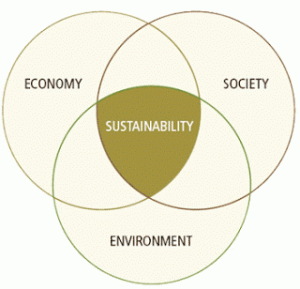
A marketing strategy is sustainable when it lowers the economy's negative environmental and social impacts and contributes to creating a more equitable and ecologically balanced system where value in products, services, and income is highly prioritized. It involves transparency, ethical practices, and a genuine desire to make a positive environmental difference.


Sustainable marketing also requires a fundamental process of rethinking business models, supply chains, and consumer engagement strategies for different projects. This process aims to create a balanced structure that allows a business to retain its relevance over time.


The 4 "P'S" of Sustainable Marketing  in Nigeria 


Like traditional marketing revolves around the "4 PS" (product, price, place, and promotion), sustainable marketing also functions based on a framework. The sustainable marketing framework includes the following:

  1. Sustainable Products: This form of sustainable marketing involves developing products and services that are environmentally friendly, ethically sourced, and meet high social responsibility standards.
  2. Sustainable Pricing: Pricing involves implementing pricing strategies that account for the actual cost of environmental and social impacts, ensuring accessibility and affordability.
  3. Sustainable Place: In obtaining a sustainable marketing strategy, a sustainable place is needed to optimize distribution channels and supply chains to minimize carbon footprints, reduce waste, and support local communities.
  4. Sustainable Promotion: This marketing strategy involves crafting communications that educate consumers about a brand, promote sustainable lifestyles, and inspire positive change within a particular environment.


The Impact of Sustainable Marketing on Brand Equity and Consumer Perception in Nigeria 


In Nigeria, consumers are increasingly drawn to brands that create a climate-conscious environment. By embracing sustainable practices, companies can cultivate a positive brand image, build trust, and foster long-lasting customer relationships. The potential for enhanced brand equity and improved consumer perception is a promising outcome of sustainable marketing practices. When these consumers perceive that a brand is genuinely committed to environmental and social responsibility, it can help enhance brand equity and improve their loyalty to the brand.


Sustainable marketing practices can influence consumer perceptions and purchasing decisions, especially for younger generations. They are more likely to support brands that align with their values and demonstrate a commitment to creating a better world with equity and style. Communicating the brand's sustainability efforts can build a better environment that resonates with these consumers, differentiating it from competitors.


Challenges and Considerations in Sustainable Marketing  In Nigeria


While sustainable marketing has enormous benefits, it is not without its challenges. In the Nigerian context, these challenges may include limited access to sustainable resources, lack of awareness and understanding of sustainable marketing practices, and the need for significant investments in infrastructure and training. A comprehensive sustainable marketing strategy requires significant resources, expertise, and a long-term commitment.


One of Nigeria's primary challenges in the sustainable market is ensuring that sustainability efforts are genuine, not just greenwashing. Brands must be prepared to back up their sustainable marketing claims with tangible actions, transparent reporting, and a genuine commitment to sustainability. This is crucial for building trust and credibility with consumers. 


The Impact of Brands on the  Society and the Environment in Nigeria


The impact of brands on society in Nigeria is tremendous and continues to increase steadily as time progresses. Brands now significantly influence consumer behavior and societal norms. Hence, companies need to recognize the far-reaching impact of their marketing campaigns and products on their environment and communities. For instance, a brand that promotes sustainable farming practices can help reduce deforestation and improve food security in rural communities.


Over time, consumers purchase based on the influence they get from these brands. From the thinking process to the decision-making process every step of the way, brands have lots of opportunities to increase their sales and client relationships as far as they are willing to build optimistic impacts on consumers by selling the brand's unique value proposition such that consumers reasonable with the brands giving them more reason to purchase from them.


Sustainable marketing must also go hand-in-hand with responsible business practices, prioritizing fair labor practices, minimizing environmental footprints, and ethical sourcing.


Challenges and Opportunities for Brands


Implementing sustainable marketing strategies can be complex and requires an extensive understanding of energy consumption, waste management supply chains, and material sourcing.


Brands will likely face challenges balancing sustainability goals with cost considerations and consumer demand. However, these challenges can also serve as an opportunity for innovation, collaboration, and the development of new business models that provide long-term sustainability practices rather than promoting short-term gains.


Approaches for  Sustainable Marketing in Nigeria


To truly embrace sustainable marketing, these brands must adopt a holistic approach that shows every aspect of their company's operations and corporate culture.


Below are some strategies they should consider putting in place: 


  • Set measurable sustainability goals: In this strategy, these brands must establish clear, quantifiable targets for reducing waste and other toxic chemicals that are harmful to individuals and plants in the environment. They should also define their objectives for supporting local communities, ensuring fair labor practices, and promoting diversity.
  • Conduct thorough audits: This strategy involves assessing the environmental and social impacts of the brand's entire supply chain, from sourcing to manufacturing, distribution, and end-of-life product disposal.
  • Collaborate with stakeholders: Brands and consumers must be able to interact closely with each other, suppliers, non-governmental organizations (NGOs), industry partners, and local communities to identify areas for improvement and collaborate to solve sustainable solutions.
  • Empower sustainable choices: To obtain a valid sustainable marketing approach, it is essential to empower consumers' choices. Make it easy for consumers to make sustainable choices by offering eco-friendly product lines, sustainable packaging options, and incentives for responsible behavior.
  • Build a transparent communication system: Finally, build a transparent communication system where your sustainability efforts, challenges, and progress are visible to the public so that no one doubts your authenticity. Use clear labeling and storytelling to educate your consumers about your products' environmental and social impacts.


 5 Sustainable Marketing Strategies

Sustainable Marketing Practices

Some sustainable marketing strategies to foster brand influence include:


  1. Eco-friendly product design: 

These designs should be incorporated into acquiring sustainable materials, energy-efficient processes, and recyclable/biodegradable components.

  1. Cause-related marketing:

Ensure your brand's goals align with environmental or social causes, considering every option as you build this system. To support society and boost its results, donate a portion of the proceeds to relevant organizations and encourage consumer participation in sustainability initiatives.

  1. Influencer marketing: 

You must collaborate with other established brands that share your goals to inspire change.

  1. Green packaging:

To economize resources and manage waste,   reduce excess packaging, use recycled or compostable materials for production, and explore innovative solutions that yield more income.

  1. Sustainable supply chain management: 

Finally, it is essential that brands partner with suppliers of good reputations to implement fair trade practices and optimize logistics, thereby reducing the production of toxic wastes that are harmful to the environment.


What Is The Future of  Sustainable Marketing

As consumer awareness and demand for sustainable practices continue to grow, the future of sustainable marketing will keep on increasing. Its increase and relevance would be felt in the following ways:


  • Augmented reality experiences: 

Brands will explore augmented reality (AR) and virtual reality (VR) more to create a more educational and relatable experience with their consumers and showcase their sustainable lifestyles.

  • Blockchain transparency:

Leveraging blockchain technology to create transparent and immutable records of supply chain data. Enabling consumers to trace the origin and journey of products. Ensuring ethical and sustainable sourcing.

  • Regenerative marketing:

Regenerative marketing would now be utilized to actively restore and rebuild systems, which can help promote biodiversity and give back to the environment.

  • Circular economy models:

Rather than the traditional linear approach of making, using, and disposing of used materials, companies would explore more circular business models that make use of the strategy of reuse, repair, and recycling,  thereby minimizing waste and maximizing resource efficiency.


In conclusion, sustainable marketing in Nigeria has proven to be the only solid path in which brands seeking to retain relevance can do that. Sustainable marketing is a journey that requires a fundamental change in the mindset of both the brands and their consumers, commitment to transparency, and willingness to adapt to change and innovate new products continuously. It is a holistic approach that integrates sustainability into every aspect of a brand's operations, from product design to sourcing to manufacturing, distribution, and consumer engagement.


By kingkentus


Aug 24, 2023

How To Write Marketing Emails

1:54 AM 0
How To Write Marketing Emails


How To write Marketing Emails- Email Copywriting Tips


Marketing emails has a huge effect on the outcome of your missions. In the event that you're conveying customary advertising messages (which you ought to do), you want to ensure that your email duplicate is assisting your image with accomplishing its objective.


Basically, marketing email  can represent the moment of truth of your missions. You could have an astounding proposition, and your email could land in all the right inboxes. On the off chance that you don't bait readers in with the right copywriting however, then, at that point, your email showcasing will not find success. Each expression of your email content has an effect, so ensure that you're composing your messages cautiously.


Fortunately, high-influence email copywriting can be accomplished with the right equation. With the right tips and comprehension of email content, you can turn into a specialist email publicist in a matter of moments. Follow our email copywriting guide beneath to begin running email showcasing efforts that help out your business.


Priorities straight: Composing the Title


The title is one of the most significant pieces of any powerful email crusade. The title is the primary thing that the beneficiary will see, and the headline will presumably decide if your email gets opened or not. There's no good reason for having the impeccably created email body duplicate on the off chance that your headline misses the mark. Terrible titles will most likely mean the messages don't for even a moment get opened in any case.


In this way, with regards to email copywriting, begin by giving cautious consideration to the title. The title of the email needs to make interest, and it should be convincing enough for the beneficiary to understand more.


Solid headlines utilize significant language. You need the email headline to get the reader eager to make a move. Rather than utilizing a headline like "exceptional lunch offer", somewhat go for "attempt our unique lunch offer". Remembering an action word for the headline is generally really smart for more grounded content.


The title additionally should be clear, succinct, and snappy. The reader should have the option to see precisely the exact thing the email will be about and why they ought to open it. It ought to likewise be sufficiently fun to catch the reader's eye, as a matter of fact.


The headline should be obviously associated with the body duplicate. Indeed, titles are there to get readers to tap on your email. Assuming that the reader gets past the body duplicate and turns out to be all confused about the headline, then, at that point, you've accomplished something wrong. In this way, ensure that the email duplicate and titles have a reasonable association.


To build your open rate, then, at that point, titles are the primary spot to center. Email copywriting is inconsequential on the off chance that you don't get this part right first.


Make it Pertinent


All around good, you've figured out how to get your interest group to open your email. Presently, you really want to keep up with their advantage.


Your crowd could get their inbox barraged with email showcasing content consistently, so you need to ensure that your email sticks out and offers something fascinating to them. To do this, you really want to guarantee that the email is pertinent to the beneficiary.


Obviously make sense of why you're sending them the email. Email copywriting ought to get going by snatching consideration and by laying out importance. Whenever you compose email crusades, get the email going by making sense of the significance of the message.


"Hi, gratitude for making your most memorable buy… " is one model. Presently the reader realizes the reason why they've gotten this email (since they've recently made their most memorable buy), so they will have motivation to peruse.


In the event that you don't make your email pertinent straight away, then your endorsers could rapidly close your email without reading further.


Make a Story


You've caught your endorser's consideration with a convincing title, you've made the promoting email pertinent, presently they're prepared to peruse the remainder of the email duplicate. Your following stage in email copywriting is to begin to recount a story.


You don't need your email showcasing effort to be excessively special. All things considered, email showcasing ought to create consideration in your ideal interest group, and inspire them to make the following stride. In the event that you begin to disentangle a brief tale in your email, you will have better progress here.


For instance, suppose your email promoting procedure is to get your crowd to pursue a free seminar on the most proficient method to make bread. An instance of making a story could be centered around how you figured out how to prepare bread, the difficulties you confronted, and for what reason you're presently offering a seminar on bread making help striving for dough punchers. You might say "Let me recount how I figured out how to prepare bread… ".


You don't need to compose a top of the line novel here. Simply a speedy foundation story on why you're sending this email and why it's useful to your readers will go far.


Narrating is intriguing and engaging as well. Not in the least does narrating make your email more straightforward to process, however it additionally assists with keeping the reader's consideration.


Transform Elements into Advantages


This is a significant illustration in email copywriting, or any sort of deals copywriting besides. One of the most amazing practices to follow when you compose email crusades is to transform any elements you're presenting into clear advantages for the reader.


Your email crusade shouldn't simply offer a story on the thing the email will offer. You additionally need to frame how this will help the reader. Composing messages for advertising ought to be finished to rouse the reader, and let them in on how anything that you're offering will work on their life. Obviously make sense of the worth of your email each and every time in the body of your substance.


For an extremely fundamental model, your showcasing email could say "Our new coat is made with prevalent polyester with a wool lining". This offers no worth, just data. In the event that you rather say "Our new coat is hotter and milder with predominant polyester and a wool lining", you're making sense of for the reader what sort of advantage they will get from the coat.


Make an Activity


For what reason would you say you are conveying the email in any case? Your email marketing necessitates to obviously uphold your desired activity. Email showcasing isn't just about promoting items, it's tied in with dropping your endorsers down your advertising pipe. You really want them to make a move.


In this way, the body duplicate of your email ought to be centered around getting the reader to make a move toward the finish of the email. This is one of the main email copywriting tips out there, since, supposing that you don't have a reasonable move that should be initiated, then your email showcasing effort will be really silly.


For instance, your email duplicate could be made around getting supporters to read your most recent blog entry. When they're on the blog entry, you could guide them to an item that you're featuring.


If so, don't zero in your email duplicate on your item. Your title and email duplicate ought to be centered around the blog entry that you need to get endorsers eager to peruse. Before you get everything rolling with email marketing, consistently comprehend the chain of moves that you believe your endorsers should initiate, then center the email showcasing endeavors around this.


Upgrade Your Source of inspiration


One of the main pieces of email promotion boils down to the source of inspiration. You've had the option to receive your email opened, you've propelled supporters with compelling email duplicate, you've made a reasonable move that you believe your crowd should initiate. Presently you really want to ensure they give you that click that you're later.


Perhaps you need to move them to a presentation page or inspire them to enter a giveaway. In any event, your CTA will accomplish this.


To this end composing the right source of inspiration (CTA) is significant. The CTA is the last opportunity you need to get your readers to make a move, so make it convincing. Keep your CTA basic, clear and punchy.


Your CTA likewise needs to utilize noteworthy language. For instance, don't simply make your CTA say "Cost", rather say "Really look at Cost". You need to make an activity, and including action words will assist you with accomplishing this.


While attempting to lay out the ideal CTA duplicate, you ought to be A/B testing your promoting messages. A/B testing allows you to give a shot different CTA varieties to see which one does best. Each time you test, you can refine your email copywriting somewhat more as indicated by which adaptation comes by the best outcomes.


Thinking about how to compose the ideal CTA? Look at these models for motivation.


Compose Like a Companion


One of the main things to recollect with email copywriting is that you would rather not sound like a business attempting to sell its item. All things considered, your email duplicate ought to be tomfoolery and well disposed.


One of the most amazing practices with marketing emails is to keep in touch with your endorsers as though they were your companions. Try not to be excessively formal, and attempt to keep things conversational. Email promoting is tied in with building a relationship with your email list. Don't hesitate for even a moment to flaunt your character and have a smidgen of tomfoolery.


You believe your supporters should like you, and to get more from your messages than just data. Giving a cordial encounter through your marketing emails will surely assist you with developing a more intrigued crowd.


Email Copywriting Best Practices


We've covered the main strides for you to take as you create your next email duplicate. There are even more marketing emails  tips that you ought to remember each time you compose an email for your crowd. Recall these prescribed procedures for making all the more remarkable email content:


Keep it short: Marketing Emails should be short, basic, and forthright. A typical slip-up for an email publicist to make is composing long sections. Your endorsers lack opportunity and energy to understand this, regardless of how great your marketing emails is. Keep it short, supportive, and significant.


Add esteem: At whatever point you compose an email for your supporters, you really want to ensure that it contributes something of significant worth to them. Your subscribers didn't pursue your rundown to be assaulted with deals messages. All things being equal, they needed to receive something of significant worth consequently. Offer supportive tips, rebate codes, fascinating news, advancements, or anything that will really help your readers here and there. This is the best way to keep your open rate up.


Compose straightforwardly to the readers: When you compose an email, say "You". Converse with the readers straightforwardly and ensure that your copywriting feels individual. You maintain that your readers should connect with your messages and be keen on everything you need to say to them. Writing in the subsequent individual is one of the simplest ways of further developing your email language.

Customize your messages: On the off chance that you believe your leads should change over, you really want to send the right happy to the perfect individuals. Any great email centers around personalization. This isn't simply including their most memorable name, however it's tied in with addressing a particular gathering of clients or readers about a particular item. This is the reason having the right lead the executives device is fundamental for good email advertising. This permits you to portion your leads into various gatherings, and ensure that the right readers get sent the right content.For model, assuming you're conveying a markdown code for first-time purchasers, don't send this to your rundown of existing clients, since it doesn't matter to them.


customized email


Get clarification on some pressing issues: There are heaps of various methodologies that you can take while composing an email, however one of the simplest procedures is to pose inquiries to your readers. This is an extraordinary marketing emails  strategy that can assist with advancing the advantages you're proposing to your supporters. Questions get your readers contemplating what is happening, making it simpler for them to get a handle on the advantages of your business.


Have a good time and investigation: We've uncovered probably the best tips for strong email duplicate, however there are no set layouts or rules with regards to marketing emails. While you're composing content, make sure to explore different avenues regarding it and evaluate new methodologies. This is the best way to sort out precisely exact things content works and what you ought to zero in on. Make sure to keep email promoting fun - this is significant for your image and for your clients.


Conclusion


Email promoting is one of the most remarkable strategies for drawing in new clients and holding existing ones. The right happy can change over possible new clients, increment your blog traffic, drive up your deals, get more guests to your point of arrival, or more. Anything that activity you need from your messages, it is fundamental to follow the right copywriting rehearses.


Follow the tips we've recorded above, and you will see a major distinction in your email showcasing results. With the right marketing emails practices and email showcasing programming, you can undoubtedly take your business to a higher level.

By kingkentus